☀Divyakaal
Om Jai Jagdish Hare - Bhagwan Jagdishwar Ki Aarti
🪔 Aarti

Om Jai Jagdish Hare — Aarti to Lord Vishnu with Meaning

Om Jai Jagdish Hare is a beloved aarti to Lord Vishnu, addressing him as the Lord of the universe, its sustainer, and a compassionate refuge. Sung during daily worship and special religious occasions, it expresses a devotee’s trust and surrender. Understanding its meaning can help you bring greater attentiveness, humility, and gratitude to your prayer.

Text source: Aarti Sangrah
❁

Om Jai Jagdish Hare - Bhagwan Jagdishwar Ki Aarti

ॐ जय जगदीश हरे, स्वामी जय जगदीश हरे। भक्तजनों के संकट क्षण में दूर करे॥ ॐ जय जगदीश हरे॥Om jai Jagdish hare, Swami jai Jagdish hare. Bhaktajanon ke sankat kshan mein door kare॥ Om jai Jagdish hare॥

जो ध्यावे फल पावे, दुःख विनसे मन का। सुख-सम्पत्ति घर आवे, कष्ट मिटे तन का॥ ॐ जय जगदीश हरे॥Jo dhyave phal pave, dukh vinase man ka. Sukh-sampatti ghar aave, kasht mite tan ka॥ Om jai Jagdish hare॥

मात-पिता तुम मेरे, शरण गहूं किसकी। तुम बिन और न दूजा, आस करूं जिसकी॥ ॐ जय जगदीश हरे॥Maat-pita tum mere, sharan gahoon kiski. Tum bin aur na dooja, aas karoon jiski॥ Om jai Jagdish hare॥

तुम पूरण परमात्मा, तुम अन्तर्यामी। पारब्रह्म परमेश्वर, तुम सबके स्वामी॥ ॐ जय जगदीश हरे॥Tum pooran Paramatma, tum Antaryami. Parabrahma Parameshwar, tum sabke Swami॥ Om jai Jagdish hare॥

तुम करुणा के सागर, तुम पालनकर्ता। मैं मूरख खल कामी, कृपा करो भर्ता॥ ॐ जय जगदीश हरे॥Tum karuna ke sagar, tum palankarta. Main moorakh khal kami, kripa karo bharta॥ Om jai Jagdish hare॥

तुम हो एक अगोचर, सबके प्राणपति। किस विधि मिलूं दयामय, तुमको मैं कुमति॥ ॐ जय जगदीश हरे॥Tum ho ek agochar, sabke pranapati. Kis vidhi miloon dayamay, tumko main kumati॥ Om jai Jagdish hare॥

दीनबन्धु दुःखहर्ता, तुम ठाकुर मेरे। अपने हाथ उठाओ, द्वार पड़ा तेरे॥ ॐ जय जगदीश हरे॥Deenbandhu dukhharta, tum Thakur mere. Apne haath uthao, dwaar pada tere॥ Om jai Jagdish hare॥

विषय-विकार मिटाओ, पाप हरो देवा। श्रद्धा-भक्ति बढ़ाओ, सन्तन की सेवा॥ ॐ जय जगदीश हरे॥Vishay-vikar mitao, paap haro deva. Shraddha-bhakti badhao, santan ki seva॥ Om jai Jagdish hare॥

तन-मन-धन सब है तेरा, स्वामी सब कुछ है तेरा। तेरा तुझको अर्पण, क्या लागे मेरा॥ ॐ जय जगदीश हरे॥Tan-man-dhan sab hai tera, Swami sab kuchh hai tera. Tera tujhko arpan, kya lage mera॥ Om jai Jagdish hare॥

जगदीश्वरजी की आरती, जो कोई नर गावे। कहत शिवानन्द स्वामी, मनवान्छित फल पावे॥ ॐ जय जगदीश हरे॥Jagdishwarji ki aarti, jo koi nar gave. Kahat Shivanand Swami, manvanchhit phal pave॥ Om jai Jagdish hare॥

॥ iti ॥

Text: Aarti Sangrah

Om Jai Jagdish Hare - Bhagwan Jagdishwar Ki Aarti — Meaning

The aarti opens by praising the Lord of the universe and recalling his compassion. The devotee expresses faith that remembrance of God offers support through difficulty, bringing hope, contentment, and inner reassurance. God is approached as a loving mother and father, the closest refuge. Names such as the complete Supreme Being, the indwelling knower, and the transcendent Absolute describe him as the foundation of existence who knows every heart. Praising him as an ocean of compassion and the sustainer, the devotee acknowledges personal ignorance and weakness.

The prayer then addresses God as beyond ordinary perception yet the source of every life. The devotee asks how to draw near to him and seeks help from the friend of the vulnerable. Attention turns inward: may attachment lessen, wrongdoing be overcome, devotion deepen, and service to saintly people flourish. Body, mind, and possessions are finally offered back to God as gifts that already belong to him. The closing, bearing the name Shivanand Swami, describes the traditional blessings associated with singing the aarti. Devotees understand this as an expression of hope in divine grace and the fulfillment of worthy aspirations.

When to Sing Om Jai Jagdish Hare

You can sing this aarti at the close of morning or evening worship of Lord Vishnu. Many households also include it on Ekadashi, Purnima, and after Satyanarayan Puja. Some families sing it during Lakshmi-Narayan worship at Diwali. The occasions and order of worship vary between households and temples. For daily practice, choose a convenient time that allows you to pray attentively. If you are planning worship for a festival, see the DivyaKaal festival page for this year's date and muhurat.

Preparing the Thali and Offering the Lamp

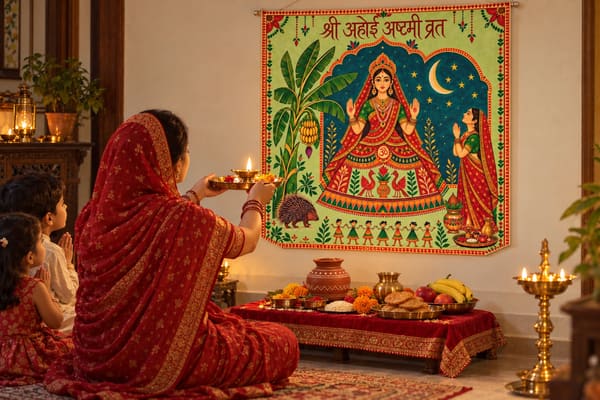
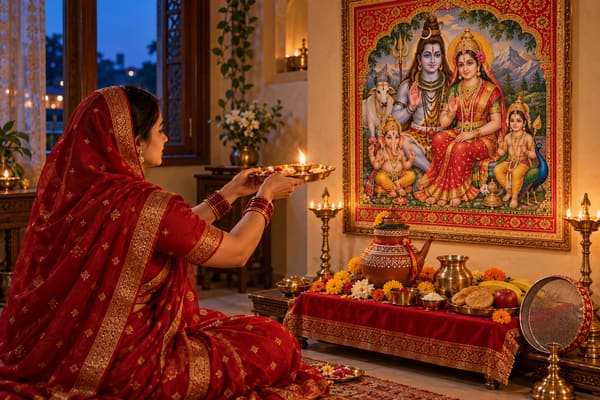
Place a steady lamp on a clean aarti thali and hold it carefully before the deity’s image. Traditionally, the lamp is moved clockwise while the aarti is sung. One widely followed sequence offers four circles at the feet, two at the navel, one at the face, and seven around the whole form. Practices differ across temples and sampradayas, so follow the custom of your place of worship. A bell may accompany the singing at a gentle volume. Keep the thali balanced and the flame safely away from clothing, decorations, and children.

The Significance of Worshipping Jagdishwar

The name Jagdishwar means Lord of the universe. In Vishnu worship, his role as sustainer is especially cherished, and devotees associate this aarti with remembering divine care and protection in everyday life. Singing together allows everyone present to participate in a shared act of prayer. According to devotional tradition, regular, attentive aarti nurtures gratitude and devotion. Its familiar melody and accessible forms of address also help children and those new to worship become comfortable with their family’s devotional practices.

Receiving Aarti and Sharing Prasad

After singing, set the thali down securely or offer it carefully to those present. A customary way to receive aarti is to hold the palms at a safe distance above the flame, then bring the hands towards the forehead and eyes in reverence. Bow to the deity and receive and share the offered prasad respectfully. Some families also offer flowers or conclude with silent prayer. Keep the lamp on a stable, fire-safe surface and attend to it while it remains lit. Close the worship with calmness and goodwill towards others.

Frequently asked questions

Which deity is Om Jai Jagdish Hare dedicated to?

Om Jai Jagdish Hare is primarily sung as an aarti to Lord Vishnu. Jagdish and Jagdishwar mean Lord of the universe. Its broad expressions of devotion also make it a familiar part of shared household worship in many families.

Can I sing Om Jai Jagdish Hare every day?

Yes, you can include it in daily morning or evening worship. Many households sing aarti at the end of their puja. Follow your family’s customary order and sing attentively, allowing the meaning of the words to guide your prayer.

How many times should the aarti lamp be circled?

One common sequence is four circles at the deity’s feet, two at the navel, one at the face, and seven around the whole form. Regional and sampradaya practices vary, so follow the tradition observed in your household or temple.

What does offering body, mind, and wealth mean in this aarti?

It expresses gratitude and surrender by recognizing the body, thoughts, and available resources as gifts from God. In everyday life, this attitude can take the form of using those gifts responsibly through service, ethical conduct, and generosity towards others.

Remember Lord Jagdishwar by making devotion, service, and gratitude part of your day.