☀Divyakaal
Shri Ganesh Ji Ki Aarti
🪔 Aarti

Shri Ganesh Ji Ki Aarti: Meaning and Worship Guide

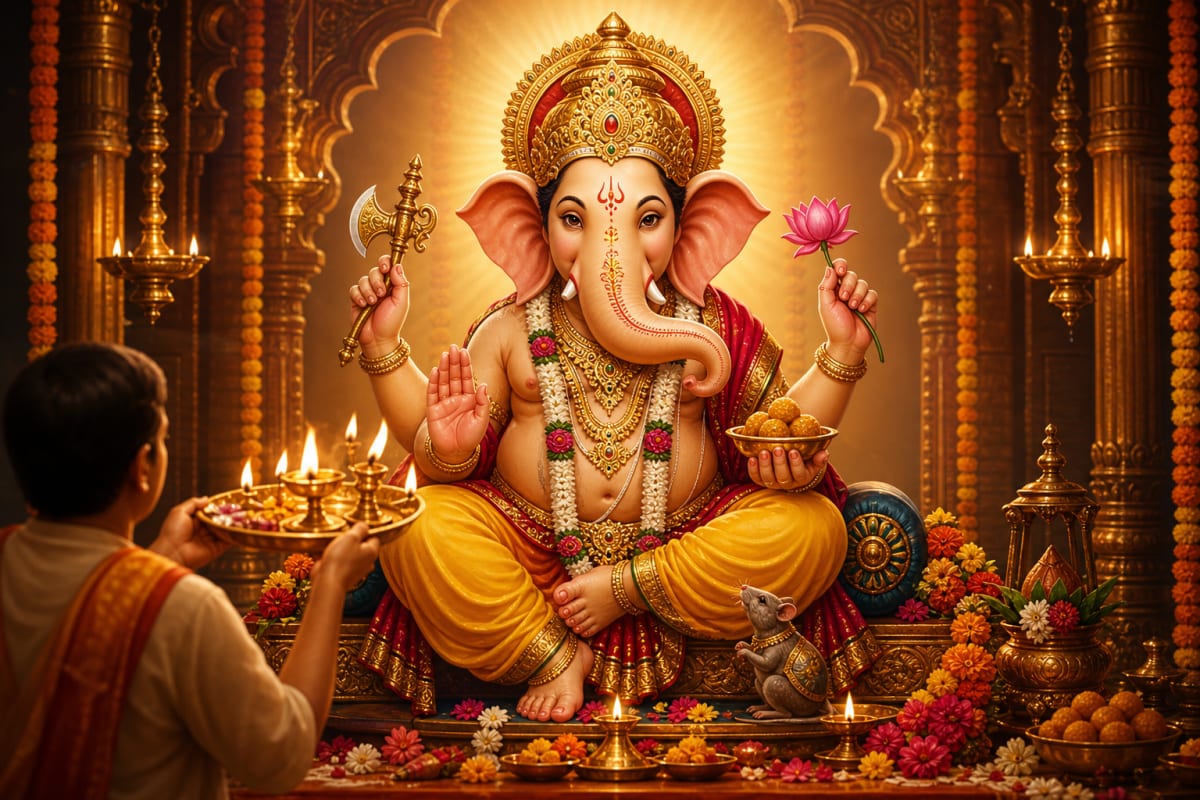
Shri Ganesh Ji Ki Aarti celebrates Lord Ganesha’s auspicious presence, compassion, and care for his devotees. Remembering him as the son of Parvati and Shiva, worshippers offer food, service, and heartfelt devotion. Whether sung during daily worship or Ganesh Chaturthi celebrations, this aarti invites you to approach Ganesha with gratitude, humility, and a spirit of surrender.

Text source: Aarti Sangrah
❁

Shri Ganesh Ji Ki Aarti

जय गणेश, जय गणेश, जय गणेश देवा। माता जाकी पार्वती, पिता महादेवा॥Jai Ganesh, Jai Ganesh, Jai Ganesh Deva. Mata jaki Parvati, pita Mahadeva.

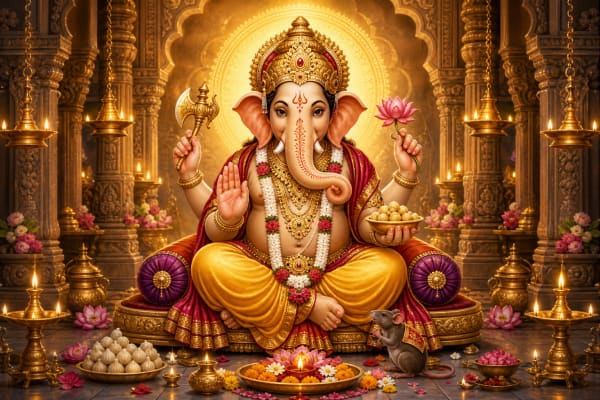
एक दंत दयावंत, चार भुजा धारी। माथे सिंदूर सोहे, मूसे की सवारी॥ (जय गणेश, जय गणेश, जय गणेश देवा…)Ek dant dayavant, char bhuja dhari. Mathe sindur sohe, muse ki savari. (Jai Ganesh, Jai Ganesh, Jai Ganesh Deva…)

पान चढ़े फल चढ़े, और चढ़े मेवा। लड्डुअन का भोग लगे, संत करें सेवा॥ (जय गणेश, जय गणेश, जय गणेश देवा…)Pan chadhe phal chadhe, aur chadhe meva. Ladduan ka bhog lage, sant karen seva. (Jai Ganesh, Jai Ganesh, Jai Ganesh Deva…)

अंधन को आंख देत, कोढ़िन को काया। बांझन को पुत्र देत, निर्धन को माया॥ (जय गणेश, जय गणेश, जय गणेश देवा…)Andhan ko aankh det, kodhin ko kaya. Banjhan ko putra det, nirdhan ko maya. (Jai Ganesh, Jai Ganesh, Jai Ganesh Deva…)

'सूर' श्याम शरण आए, सफल कीजे सेवा। दीन की लाज रखो, शंभु सुतकारी॥ कामना को पूर्ण करो, जाऊं बलिहारी॥'Sur' Shyam sharan aaye, saphal kije seva. Din ki laj rakho, Shambhu sutakari. Kamana ko purna karo, jaun balihari.

जय गणेश, जय गणेश, जय गणेश देवा। माता जाकी पार्वती, पिता महादेवा॥Jai Ganesh, Jai Ganesh, Jai Ganesh Deva. Mata jaki Parvati, pita Mahadeva.

॥ iti ॥

Text: Aarti Sangrah

Shri Ganesh Ji Ki Aarti — Meaning

The aarti opens with repeated praise of Lord Ganesha, remembering him as the son of Parvati and Mahadeva, or Shiva. This family relationship gives the opening a warm, personal quality. It then brings his familiar form to mind: one tusk, four arms, vermilion adorning his forehead, and the mouse as his vehicle. Alongside these identifying features, his compassionate nature receives special emphasis. Offerings of betel leaf, fruit, nuts, and laddus express loving hospitality, while the service of saints highlights devotion through attentive worship.

The next movement turns toward human vulnerability and the wish to find refuge in the divine. Traditional images involving sight, bodily suffering, children, and material need give voice to longing for care, support, and fulfilment. In the closing appeal, the devotee asks Ganesha to accept their service, uphold their dignity, and hear their heartfelt wishes. Addressing him again as Shiva’s son, the worshipper expresses deep humility and surrender. The return to the opening praise and remembrance of his parents completes the aarti in the same affectionate devotional mood with which it began.

When to Perform Ganesh Aarti

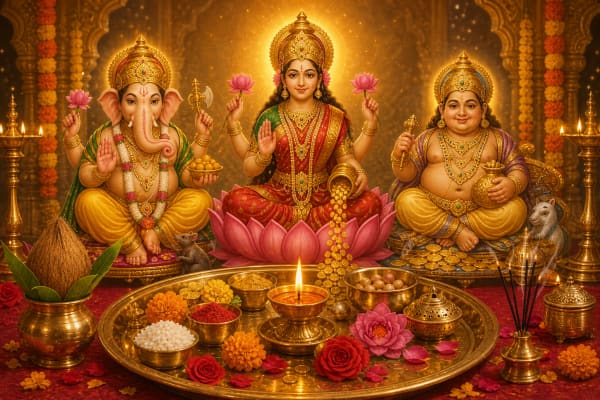
Ganesh aarti is generally performed near the end of worship, after offering the lamp and naivedya, or food offerings. In household practice, it may accompany morning or evening puja; some families observe both. It holds a special place during Ganesh Chaturthi installation worship and the days of celebration. Many families also sing it during Lakshmi-Ganesh puja at Diwali. The timing and order vary with household, regional, and devotional traditions. For this year’s date and muhurat, see the relevant DivyaKaal festival page.

Preparing the Thali and Circling the Lamp

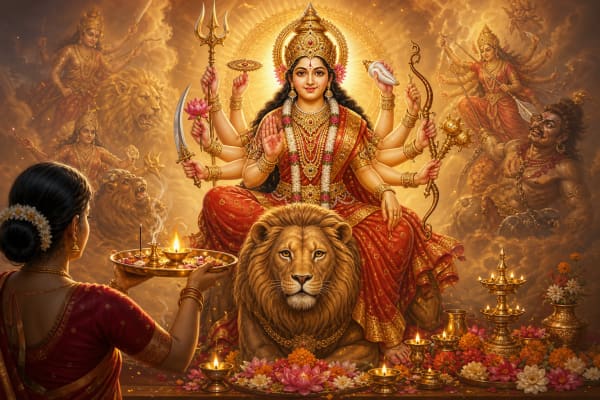
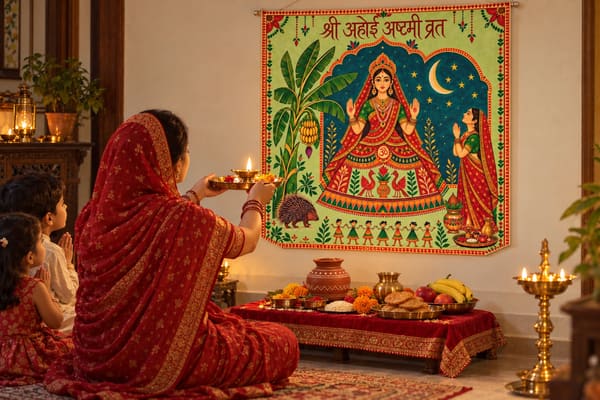
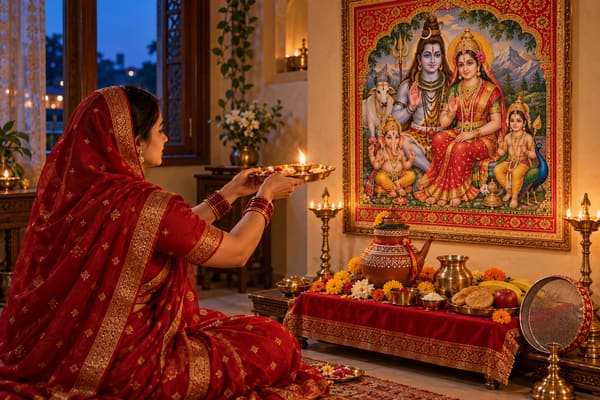
Place a ghee or oil lamp securely on the aarti thali; flowers and a bell may also be kept nearby. Facing Ganesha, move the lamp clockwise before his image. One widely followed sequence circles the feet four times, the navel twice, the face once, and the entire form seven times. Counts and movements differ among families and temples, so follow your customary practice. Gentle bell-ringing and collective singing accompany the offering, with attention resting on the deity. Keep the flame well clear of clothing and decorations.

Significance and What to Do After Aarti

Ganesha is honoured as the deity worshipped first and as the remover of obstacles, linking his worship with auspicious beginnings. Devotees believe his aarti encourages devotion, discernment, and patience. Once the singing ends, offer the aarti to those present while keeping the thali secure. A customary gesture is to hold the palms at a safe distance from the flame and then bring its warmth toward the forehead or eyes. Bow respectfully and share the offered laddus, fruit, or other food as prasad. Some families conclude with a quiet prayer.

Frequently asked questions

Can I perform Ganesh aarti every day?

Yes. Ganesh aarti can be part of daily worship at home. Sing it with devotion after offering the lamp and naivedya during morning or evening puja. Choose a time that fits your family’s customary worship practice.

In which direction should the aarti lamp be moved?

Traditionally, the lamp is moved clockwise before Ganesha’s image. Keep the thali steady and the flame clear of the image, clothing, and decorations. Follow your household or temple tradition for the detailed sequence of movements.

How many times should the lamp be circled during Ganesh aarti?

One common sequence is four circles at the feet, two at the navel, one at the face, and seven around the whole form. Regional, temple, and family practices differ in their counts and order, so follow your own worship tradition.

What food should be offered during Ganesh aarti?

The aarti mentions betel leaf, fruit, nuts, and laddus as offerings. You may offer clean, appropriately prepared naivedya that is available to you, with devotion. After aarti, distribute the offered food among family members and other worshippers as prasad.

Is Ganesh aarti performed during Diwali?

Yes. Many families perform Ganesh aarti as part of Diwali Lakshmi-Ganesh puja. The order of the Lakshmi and Ganesh aartis follows household tradition. For this year’s date and puja muhurat, see the DivyaKaal Diwali festival page.

Offer aarti with devotion, remember Ganesha, and share the prasad.