☀Divyakaal
Shri Hanuman Ji Ki Aarti – Aarti Kijai Hanuman Lala Ki
🪔 Aarti

Shri Hanuman Ji Ki Aarti — Aarti Kijai Hanuman Lala Ki

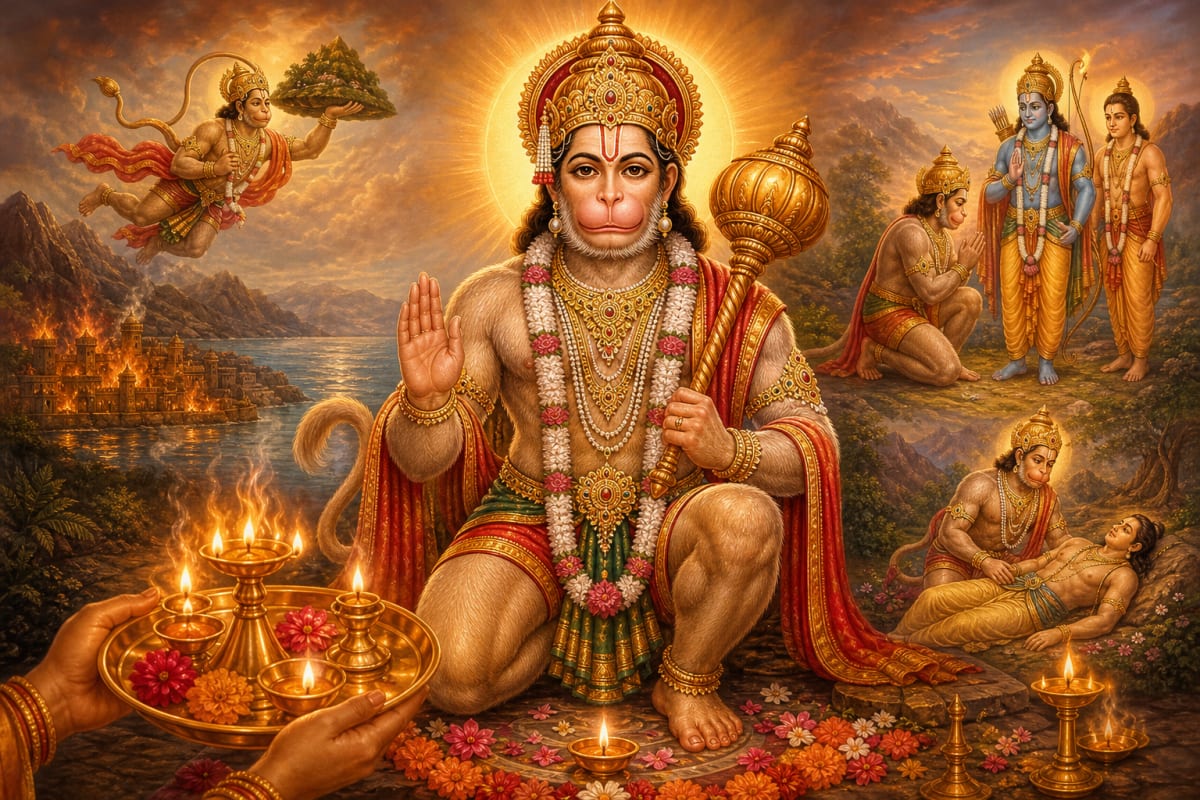
Shri Hanuman Ji Ki Aarti celebrates Hanuman’s strength, compassion and unwavering service to Shri Rama. It recalls his search for Sita, his courage in Lanka and his journey to bring Sanjivani for Lakshmana. Understanding its meaning helps you approach the aarti with attention and affection, reflecting on the courage, humility and dedication that Hanuman embodies.

Text source: परंपरागत हनुमान आरती — आरती संग्रह: श्री हनुमानजी आरती
❁

Shri Hanuman Ji Ki Aarti – Aarti Kijai Hanuman Lala Ki

आरती कीजै हनुमान लला की। दुष्ट दलन रघुनाथ कला की॥Aarti kijai Hanuman lala ki. Dusht dalan Raghunath kala ki.

जाके बल से गिरिवर कांपे। रोग दोष जाके निकट न झांके॥Jake bal se girivar kanpe. Rog dosh jake nikat na jhanke.

अंजनि पुत्र महा बलदाई। सन्तन के प्रभु सदा सहाई॥Anjani putra maha baldai. Santan ke prabhu sada sahai.

दे बीरा रघुनाथ पठाए। लंका जारि सिया सुधि लाए॥De bira Raghunath pathae. Lanka jari Siya sudhi lae.

लंका सो कोट समुद्र-सी खाई। जात पवनसुत बार न लाई॥Lanka so kot samudra-si khai. Jat Pavansut bar na lai.

लंका जारि असुर संहारे। सियारामजी के काज सवारे॥Lanka jari asur sanhare. Siyaramji ke kaj savare.

लक्ष्मण मूर्छित पड़े सकारे। आनि संजीवन प्राण उबारे॥Lakshman murchhit pade sakare. Ani Sanjivan pran ubare.

पैठि पाताल तोरि जम-कारे। अहिरावण की भुजा उखारे॥Paithi patal tori jam-kare. Ahiravan ki bhuja ukhare.

बाएं भुजा असुरदल मारे। दाहिने भुजा संतजन तारे॥Baen bhuja asurdal mare. Dahine bhuja santjan tare.

सुर नर मुनि आरती उतारें। जय जय जय हनुमान उचारें॥Sur nar muni aarti utaren. Jai jai jai Hanuman ucharen.

कंचन थार कपूर लौ छाई। आरती करत अंजना माई॥Kanchan thar kapur lau chhai. Aarti karat Anjana mai.

जो हनुमानजी की आरती गावे। बसि बैकुण्ठ परम पद पावे॥Jo Hanumanji ki aarti gave. Basi Baikunth param pad pave.

॥ iti ॥

Text: परंपरागत हनुमान आरती — आरती संग्रह: श्री हनुमानजी आरती
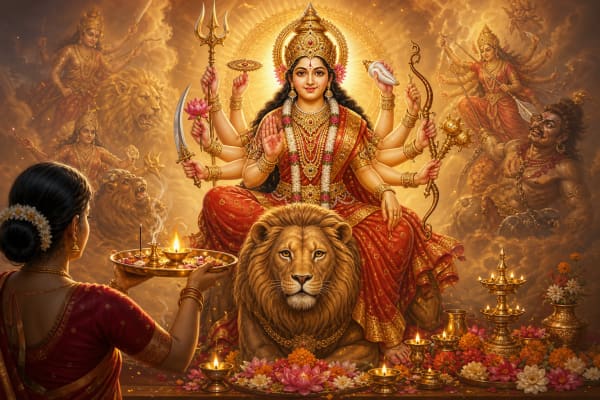
Shri Hanuman Ji Ki Aarti – Aarti Kijai Hanuman Lala Ki — Meaning

The aarti honours beloved Hanuman, the vanquisher of evil and the devoted servant who carries out Shri Raghunath's work. It praises his extraordinary strength, his protection of the saintly, and the shelter devotees find in him. Sent by Shri Rama, he crosses the sea, reaches the fortified city of Lanka, and returns with news of Sita. His burning of Lanka and defeat of hostile forces recall his courage in the service of Sita and Rama.

The hymn then remembers his bringing Sanjivani to save the unconscious Lakshmana and his descent into the netherworld to defeat Ahiravana. His two arms express both the destruction of evil and the protection of devotees. Gods, human beings, and sages proclaim his glory, while Mother Anjana offers aarti with a golden tray and a camphor flame. The final verse celebrates the spiritual fruit of devoted aarti singing: Vaikuntha and the supreme state of liberation. Throughout, strength, compassion, humility, and steadfast devotion to Shri Rama shine together.

The Significance of Hanuman and His Aarti

Hanuman brings strength and humility together. His courage serves Shri Rama and the cause of dharma rather than personal recognition. Alongside heroic deeds, this aarti makes room for compassion towards the saintly and the affection of his mother, Anjana. Devotees believe that singing it attentively encourages devotion to Rama, courage and a willingness to serve. As you sing, you may reflect on one quality to carry into daily life: readiness to fulfil a responsibility, gentleness in speech or practical help for someone who needs it.

When to Perform Hanuman Ji Aarti

At home, Hanuman Ji Aarti may be offered at the end of morning or evening worship. Many devotees give special attention to his worship on Tuesdays and Saturdays. The aarti also holds a special place during Hanuman Jayanti, Rama Navami and Dussehra, also called Vijayadashami. In some regions, Hanuman worship is observed on Kali Chaudas. The timing and order of worship differ between temples and households, so follow the practice familiar to your community. See the DivyaKaal festival page for this year’s date and muhurat.

How to Offer the Lamp and Ring the Bell

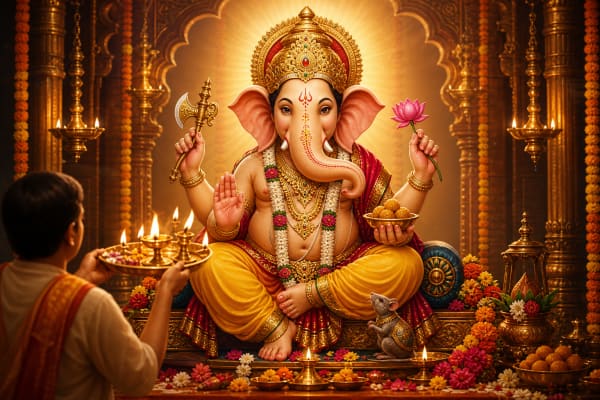
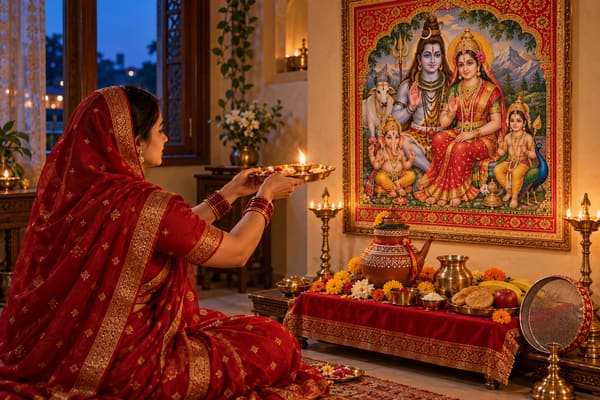
Place a clean aarti tray before Hanuman’s image, with a stable lamp. If using camphor, light it in a suitable fire-resistant holder. Arrange yourself comfortably before the deity; facing east or north is customary in many homes. Move the lamp clockwise before the image, using calm, controlled movements. One widely followed sequence is four circles at the feet, two at the navel, one at the face and seven around the whole form. Family and sampradaya traditions may follow a different sequence. Ring the bell gently so that the singing remains clear and audible. Keep the flame away from clothing, flowers and decorations, and hold the tray securely throughout the offering.

Receiving Aarti and Sharing Prasad

After the offering, bring the tray safely before those present. Devotees pass their palms over the flame at a comfortable distance, then touch their eyes or forehead. This gesture, commonly called receiving aarti, expresses reverence and a willingness to receive divine grace. Offer a respectful bow and distribute the food offered in worship as prasad. Spend a few quiet moments remembering Hanuman’s spirit of service before returning to daily activities. Place the lamp on a secure surface and continue to supervise it while it remains alight.

Frequently asked questions

What is the right time to perform Hanuman Ji Aarti?

Hanuman Ji Aarti is commonly performed at the end of morning or evening worship. Tuesdays and Saturdays are especially associated with his worship. Follow your household or temple custom and choose a time when you can participate calmly and attentively.

Can I perform Hanuman Ji Aarti every day?

Yes, you can include Hanuman Ji Aarti in your daily worship. Prepare a clean space and sing with attention to its meaning. Keep the practice manageable and connect it with Hanuman’s qualities of service, humility and devotion to Shri Rama.

How many times should the aarti lamp be circled?

One common sequence is four clockwise circles at the feet, two at the navel, one at the face and seven around the deity’s whole form. The sequence can vary across households and temples, so follow the tradition practised in your place of worship.

Should I use a ghee lamp or camphor for Hanuman Ji Aarti?

Both ghee lamps and camphor are used in aarti traditions. Choose according to your household or temple practice. Keep the lamp stable, burn camphor in a fire-resistant holder and maintain a safe distance from the flame and heated tray.

What do Vaikuntha and the supreme state mean in this aarti?

Vaikuntha is the divine abode of Lord Vishnu. The supreme state refers to spiritual fulfilment or liberation. The aarti closes with this devotional ideal, directing the worshipper’s attention towards closeness to God and a life of wholehearted surrender.

Offer your devotion to Hanuman and carry his spirit of service into daily life.

Hanuman Ji Aarti Lyrics with Meaning | Divyakaal