☀Divyakaal
Shri Mahalakshmi Ashtakam
🕉️ Stotra & Stuti

Shri Mahalakshmi Ashtakam

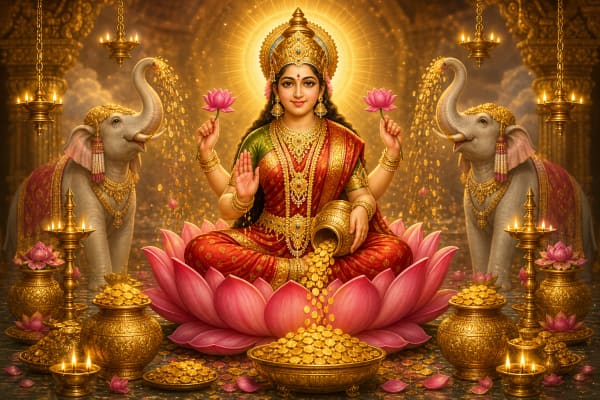
Shri Mahalakshmi Ashtakam is a sacred hymn of eight verses praising Maa Mahalakshmi. Attributed to Indra, it salutes the Mother as Mahamaya, the primordial power, the embodiment of supreme reality and the Mother of the universe. Alongside prosperity, it honours her gifts of wisdom, relief from sorrow and liberation. Read the eight original verses followed by all three verses of the phalashruti.

Text source: पद्मपुराण-परम्परा — इन्द्रकृत श्रीमहालक्ष्म्यष्टकम्
❁

Shri Mahalakshmi Ashtakam

इन्द्र उवाच । नमस्तेऽस्तु महामाये श्रीपीठे सुरपूजिते । शङ्खचक्रगदाहस्ते महालक्ष्मि नमोऽस्तु ते ॥ १॥indra uvāca | namaste’stu mahāmāye śrīpīṭhe surapūjite | śaṅkhacakragadāhaste mahālakṣmi namo’stu te || 1 ||

नमस्ते गरुडारूढे कोलासुरभयङ्करि । सर्वपापहरे देवि महालक्ष्मि नमोऽस्तु ते ॥ २॥namaste garuḍārūḍhe kolāsurabhayaṅkari | sarvapāpahare devi mahālakṣmi namo’stu te || 2 ||

सर्वज्ञे सर्ववरदे सर्वदुष्टभयङ्करि । सर्वदुःखहरे देवि महालक्ष्मि नमोऽस्तु ते ॥ ३॥sarvajñe sarvavarade sarvaduṣṭabhayaṅkari | sarvaduḥkhahare devi mahālakṣmi namo’stu te || 3 ||

सिद्धिबुद्धिप्रदे देवि भुक्तिमुक्तिप्रदायिनि । मन्त्रमूर्ते सदा देवि महालक्ष्मि नमोऽस्तु ते ॥ ४॥siddhibuddhiprade devi bhuktimuktipradāyini | mantramūrte sadā devi mahālakṣmi namo’stu te || 4 ||

आद्यन्तरहिते देवि आद्यशक्तिमहेश्वरि । योगजे योगसम्भूते महालक्ष्मि नमोऽस्तु ते ॥ ५॥ādyantarahite devi ādyaśaktimaheśvari | yogaje yogasambhūte mahālakṣmi namo’stu te || 5 ||

स्थूलसूक्ष्ममहारौद्रे महाशक्तिमहोदरे । महापापहरे देवि महालक्ष्मि नमोऽस्तु ते ॥ ६॥sthūlasūkṣmamahāraudre mahāśaktimahodare | mahāpāpahare devi mahālakṣmi namo’stu te || 6 ||

पद्मासनस्थिते देवि परब्रह्मस्वरूपिणि । परमेशि जगन्मातर्महालक्ष्मि नमोऽस्तु ते ॥ ७॥padmāsanasthite devi parabrahmasvarūpiṇi | parameśi jaganmātarmahālakṣmi namo’stu te || 7 ||

श्वेताम्बरधरे देवि नानालङ्कारभूषिते । जगत्स्थिते जगन्मातर्महालक्ष्मि नमोऽस्तु ते ॥ ८॥śvetāmbaradhare devi nānālaṅkārabhūṣite | jagatsthite jaganmātarmahālakṣmi namo’stu te || 8 ||

महालक्ष्म्यष्टकं स्तोत्रं यः पठेद्भक्तिमान्नरः । सर्वसिद्धिमवाप्नोति राज्यं प्राप्नोति सर्वदा ॥ ९॥mahālakṣmyaṣṭakaṃ stotraṃ yaḥ paṭhedbhaktimānnaraḥ | sarvasiddhimavāpnoti rājyaṃ prāpnoti sarvadā || 9 ||

एककाले पठेन्नित्यं महापापविनाशनम् । द्विकालं यः पठेन्नित्यं धनधान्यसमन्वितः ॥ १०॥ekakāle paṭhennityaṃ mahāpāpavināśanam | dvikālaṃ yaḥ paṭhennityaṃ dhanadhānyasamanvitaḥ || 10 ||

त्रिकालं यः पठेन्नित्यं महाशत्रुविनाशनम् । महालक्ष्मीर्भवेन्नित्यं प्रसन्ना वरदा शुभा ॥ ११॥trikālaṃ yaḥ paṭhennityaṃ mahāśatruvināśanam | mahālakṣmīrbhavennityaṃ prasannā varadā śubhā || 11 ||

॥ इतीन्द्रकृतं श्रीमहालक्ष्मीस्तवम् ॥|| itīndrakṛtaṃ śrīmahālakṣmī stavam ||

॥ iti ॥

Text: पद्मपुराण-परम्परा — इन्द्रकृत श्रीमहालक्ष्म्यष्टकम्
Shri Mahalakshmi Ashtakam — Meaning

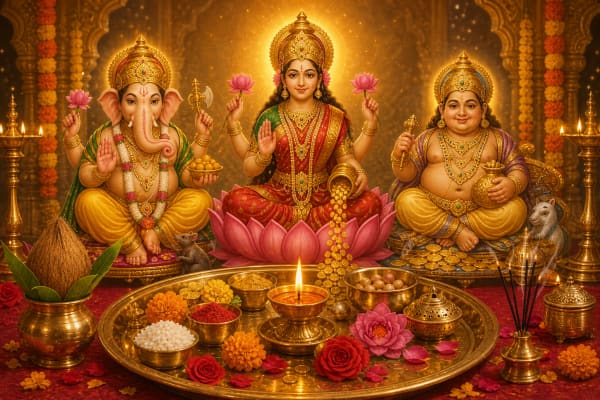
Indra bows to Mahalakshmi, worshipped by the devas, seated at the sacred seat of auspicious abundance and bearing the conch, discus and mace. He honours her as the Goddess riding Garuda, striking fear into Kolasura, removing sin and sorrow and granting blessings. She bestows accomplishment, wisdom, worldly fulfilment and liberation, and embodies sacred mantra. Without beginning or end, she is the primordial power, present in gross and subtle forms, and the Mother of the universe seated upon a lotus as the embodiment of supreme reality. Adorned in white garments and many ornaments, she receives repeated salutations. The concluding verses praise devoted recitation in terms of accomplishment, prosperity, the removal of sin and hostile obstacles, and the Mother’s gracious favour.

Indra’s hymn and its textual tradition

The hymn begins with Indra uvacha and ends by identifying itself as a praise of Mahalakshmi attributed to Indra. It is traditionally associated with the Padma Purana. The refrain Mahalakshmi namo’stu te repeatedly offers the devotee’s reverence at her feet.

Eight verses and the full phalashruti

The eight principal verses praise the Goddess’s forms and qualities. Three further verses describe the greatness of recitation. This page therefore contains eleven numbered verses and the conclusion. Include the phalashruti when reading the complete hymn.

A devotional order of recitation

Sit in a clean place. Remember Ganesha and Maa Mahalakshmi and offer a lamp, flowers and an available food offering. Begin with Indra uvacha, read all eight verses, then the phalashruti and conclusion. Bow to the Mother and pray for wisdom, righteous prosperity and everyone’s welfare.

The praise of regular recitation

The phalashruti praises daily recitation at one time for the removal of great sin, at two times for abundance of wealth and grain, and at three times for the destruction of great enemies. It concludes by praising Mahalakshmi as gracious, auspicious and a giver of blessings. Maintain your practice with devotion and regularity.

The wider spirit of Lakshmi worship

The hymn addresses the Mother as the giver of accomplishment and wisdom, worldly fulfilment and liberation, and as the embodiment of supreme reality. Its prayer embraces discernment and spiritual welfare alongside life’s material needs. Recite it with devotion during Diwali, Kojagari and regular Lakshmi worship.

Frequently asked questions

Which Goddess does Mahalakshmi Ashtakam praise?

It praises Maa Mahalakshmi as Mahamaya, the primordial power, the embodiment of mantra and the Mother of the universe.

Why is it attributed to Indra?

It begins with Indra uvacha, meaning Indra said, and the conclusion identifies it as a praise of Mahalakshmi attributed to Indra.

Why does an Ashtakam contain eleven numbered verses?

Eight verses form the principal hymn. Three additional verses are the phalashruti, bringing the complete numbered text to eleven.

Should the phalashruti also be recited?

Yes. The complete text here includes the eight principal verses, the full phalashruti and the conclusion.

Is the hymn only a prayer for wealth?

It also praises the Goddess as the giver of wisdom, accomplishment, worldly fulfilment and liberation. Its scope includes spiritual welfare as well as prosperity.

Is it recited only during Diwali?

It is recited during Diwali and Kojagari, as well as regular Lakshmi worship and other occasions observed in one’s tradition.

O Maa Mahalakshmi, bless our lives with righteous prosperity, wisdom and contentment. May our speech be gentle, our actions pure and our hearts generous. May your grace bring welfare to all beings. Mahalakshmi namo’stu te!