☀Divyakaal
Jai Ambe Gauri: Aarti of Shri Durga Ji
🪔 Aarti

Jai Ambe Gauri: Aarti of Shri Durga Ji with Meaning

Jai Ambe Gauri is a beloved aarti of Maa Durga, celebrating her motherly presence, radiant beauty and protective strength. Devotees sing it during daily worship at home and at gatherings throughout Navratri. Understanding its imagery brings greater depth to the offering of light, helping you approach the Mother with affection, attention and a sense of shared devotion.

Text source: Aarti Sangrah
❁

Jai Ambe Gauri: Aarti of Shri Durga Ji

जय अम्बे गौरी, मैया जय श्यामा गौरी। तुमको निशदिन ध्यावत, हरि ब्रह्मा शिवरी॥ ॐ जय अम्बे गौरी..Jai Ambe Gauri, Maiya jai Shyama Gauri. Tumko nishdin dhyavat, Hari Brahma Shivari. Om jai Ambe Gauri..

मांग सिंदूर विराजत, टीको मृगमद को। उज्ज्वल से दोउ नैना, चंद्रवदन नीको॥ ॐ जय अम्बे गौरी..Maang sindoor virajat, tiko mrigmad ko. Ujjval se dou naina, chandravadan niko. Om jai Ambe Gauri..

कनक समान कलेवर, रक्ताम्बर राजै। रक्तपुष्प गल माला, कंठन पर साजै॥ ॐ जय अम्बे गौरी..Kanak saman kalevar, raktambar rajai. Raktpushp gal mala, kanthan par sajai. Om jai Ambe Gauri..

केहरि वाहन राजत, खड्ग खप्परधारी। सुर-नर-मुनि-जन सेवत, तिनके दुखहारी॥ ॐ जय अम्बे गौरी..Kehari vahan rajat, khadg khappardhari. Sur-nar-muni-jan sevat, tinke dukhhari. Om jai Ambe Gauri..

कानन कुंडल शोभित, नासाग्रे मोती। कोटि चंद्र दिवाकर, राजत समज्योति॥ ॐ जय अम्बे गौरी..Kanan kundal shobhit, nasagre moti. Koti chandra divakar, rajat samjyoti. Om jai Ambe Gauri..

शुम्भ निशुम्भ बिदारै, महिषासुर घाती। धूम्र विलोचन नैना, निशिदिन मदमाती॥ ॐ जय अम्बे गौरी..Shumbh Nishumbh bidarai, Mahishasur ghati. Dhoomra vilochan naina, nishidin madmati. Om jai Ambe Gauri..

चौंसठ योगिनि मंगल गावैं, नृत्य करत भैरू। बाजत ताल मृदंगा, अरू बाजत डमरू॥ ॐ जय अम्बे गौरी..Chaunsath yogini mangal gavai, nritya karat Bhairu. Bajat taal mridanga, aru bajat damaru. Om jai Ambe Gauri..

भुजा चार अति शोभित, वरमुद्रा धारी। मनवांछित फल पावत, सेवत नर-नारी॥ ॐ जय अम्बे गौरी..Bhuja char ati shobhit, varmudra dhari. Manvanchhit phal pavat, sevat nar-nari. Om jai Ambe Gauri..

कंचन थाल विराजत, अगर कपूर बाती। श्रीमालकेतु में राजत, कोटि रतन ज्योति॥ ॐ जय अम्बे गौरी..Kanchan thal virajat, agar kapoor bati. Shrimalaketu mein rajat, koti ratan jyoti. Om jai Ambe Gauri..

श्री अम्बेजी की आरती, जो कोई नर गावै। कहत शिवानंद स्वामी, सुख-सम्पत्ति पावै॥ ॐ जय अम्बे गौरी..Shri Ambeji ki aarti, jo koi nar gavai. Kahat Shivanand Swami, sukh-sampatti pavai. Om jai Ambe Gauri..

जय अम्बे गौरी, मैया जय श्यामा गौरी। तुमको निशदिन ध्यावत, हरि ब्रह्मा शिवरी॥ ॐ जय अम्बे गौरी..Jai Ambe Gauri, Maiya jai Shyama Gauri. Tumko nishdin dhyavat, Hari Brahma Shivari. Om jai Ambe Gauri..

॥ iti ॥

Text: Aarti Sangrah

Jai Ambe Gauri: Aarti of Shri Durga Ji — Meaning

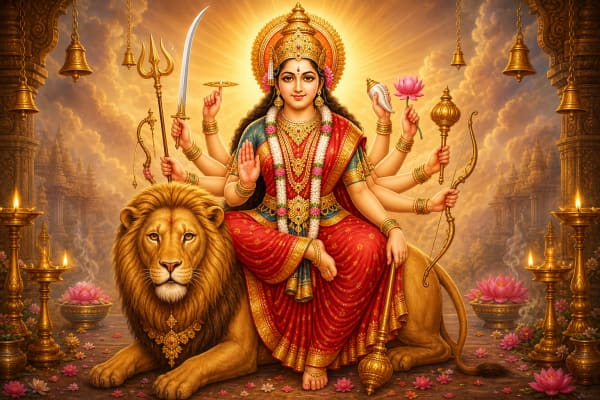
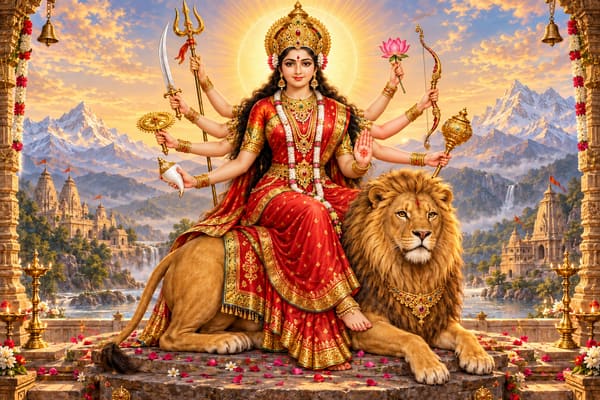
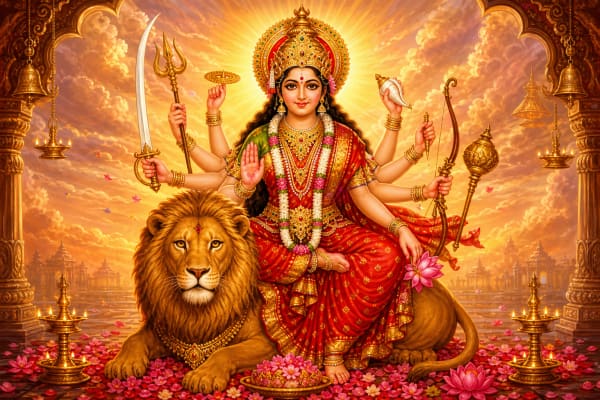
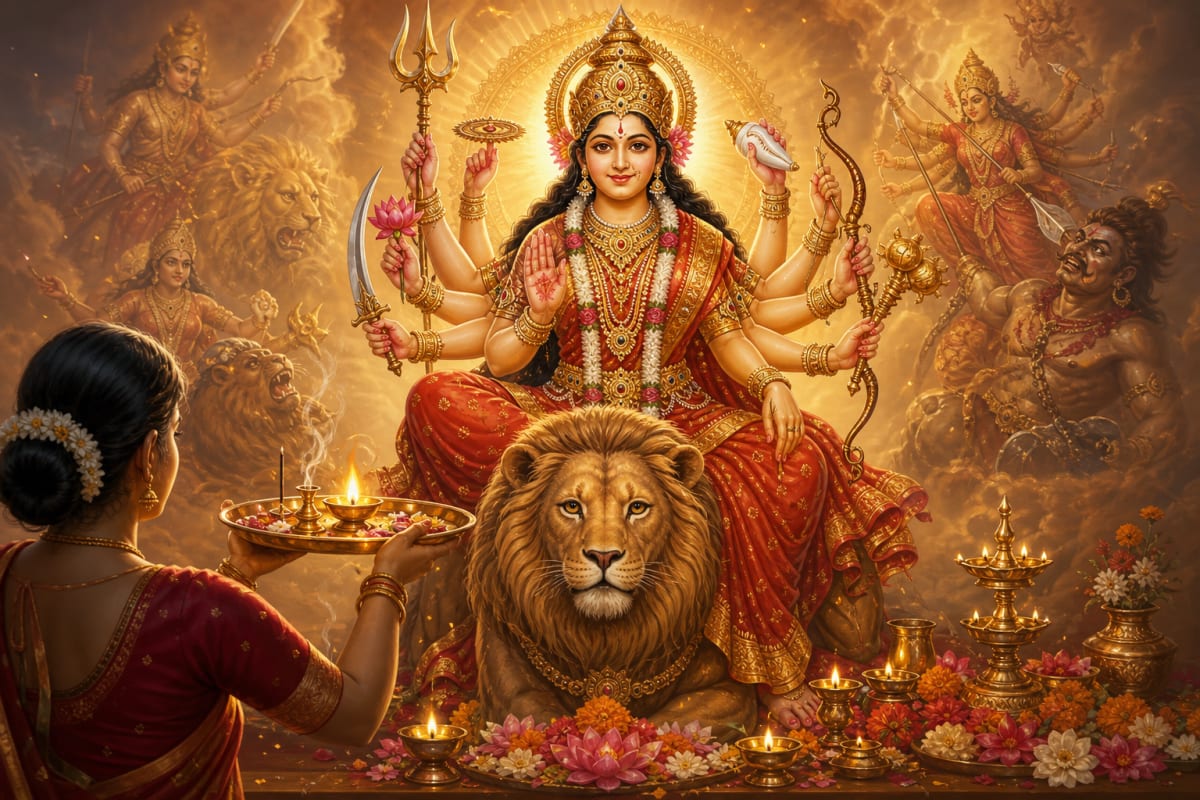
The aarti opens by praising the Mother as Ambe, Gauri and Shyama. Hari, Brahma and Shiva continually meditate upon her, expressing her exalted place in worship. Vermilion in her hair parting, a musk tilak, bright eyes and a moonlike face evoke her gracious beauty. Her golden complexion, red garments and garland of red flowers convey radiance and divine energy. Seated on a lion and holding a sword and skull-bowl, she is revered by celestial beings, people and sages as the Mother who relieves sorrow. Her ornaments shine with a brilliance compared to countless moons and suns.

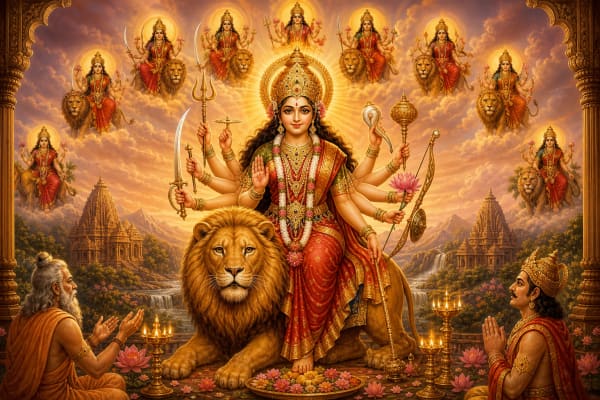
The aarti then recalls her defeat of Shumbha, Nishumbha and Mahishasura, celebrating her protective power. Fierce eyes and divine exuberance accompany a scene in which sixty-four yoginis sing auspicious songs and Bhairava dances to cymbals, mridanga and damaru. Her four arms and boon-giving gesture express compassion toward those who worship her. A golden tray, fragrant agarwood, camphor and the light of a wick bring the scene into the act of aarti itself. In the closing, Shivanand Swami praises devotional singing; devotees receive this as a prayer for happiness and well-being.

Significance and occasions for this aarti

Jai Ambe Gauri brings together Durga’s gentle and powerful aspects. Her adornments and motherly presence invite affection, while her lion and weapons recall courage and the protection of dharma. Devotees regard singing this aarti as a way to deepen surrender and focus the mind on the Goddess. It commonly concludes morning or evening worship and has a special place during Navratri, Durga Ashtami, Mahanavami and Vijayadashami. The timing follows the practice of each household or temple. See the DivyaKaal festival page for this year's date and muhurat.

Preparing the tray and offering the light

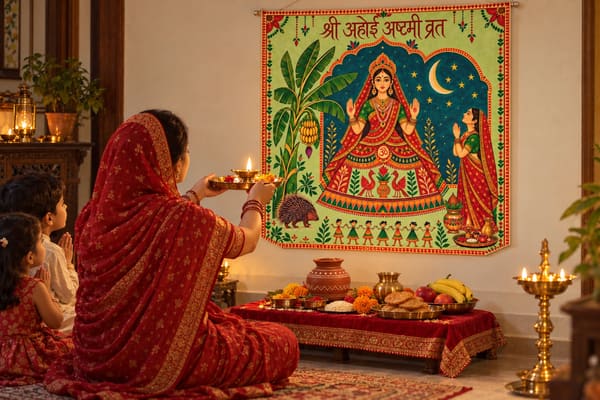
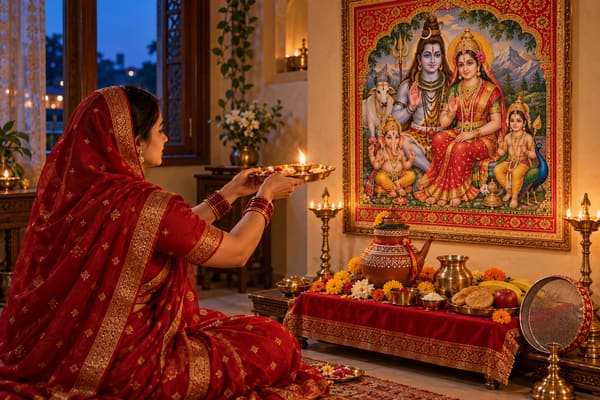
After worship, place a steady lamp on an aarti tray; camphor may also be lit according to your tradition. Keep flowers and a small bell nearby. Facing the image of the Goddess, sing the aarti and move the lamp gently clockwise. One widely followed sequence offers four circles at the feet, two before the navel, one before the face and seven before the whole form. The sequence varies across temples, regions and families, so follow your established worship tradition. Ring the bell gently and keep the flame at a safe distance from clothing, decorations and children. Others present may join in the singing.

Receiving aarti and sharing prasad

When the singing ends, bring the tray safely before those gathered. A customary gesture is to hold the palms toward the warmth, well away from the flame, and then touch them to the eyes or forehead. This expresses reverence for the light offered to the Goddess. Bow to Maa Durga, spend a few quiet moments in remembrance and share the prasad. Fruit, sweets or a freshly prepared sattvic offering may be served according to household custom. Keep the lamp on a stable, fire-safe surface and attend to it while it burns.

Frequently asked questions

Which goddess is Jai Ambe Gauri Aarti dedicated to?

Jai Ambe Gauri is dedicated to Maa Durga, addressed as Ambe, Gauri and Shyama. It celebrates her motherly presence, her lion-mounted form, her divine radiance and her power to overcome destructive forces.

Can I sing Jai Ambe Gauri Aarti every day?

Yes. Devotees commonly sing it during daily morning or evening worship of Durga. Bathing, keeping the worship space clean and approaching the aarti with a calm mind are customary preparations. Choose a regular time that suits your household routine.

Which direction should I move the aarti lamp?

The lamp is generally moved clockwise before the Goddess. A traditional sequence offers the light at the feet, navel, face and whole form. The number of circles and manner of offering vary by household and temple tradition.

Why are there different versions of Jai Ambe Gauri?

The aarti has been sung in homes, temples and devotional gatherings over many generations. Regional singing traditions and different aarti collections preserve small variations in wording, pronunciation or repetition. For group worship, following one familiar version helps everyone sing together.

Join the aarti with a quiet mind and loving remembrance of Maa Durga.