☀Divyakaal
Shri Gau Mata Ji Ki Aarti
🪔 Aarti

Shri Gau Mata Ji Ki Aarti and Its Meaning

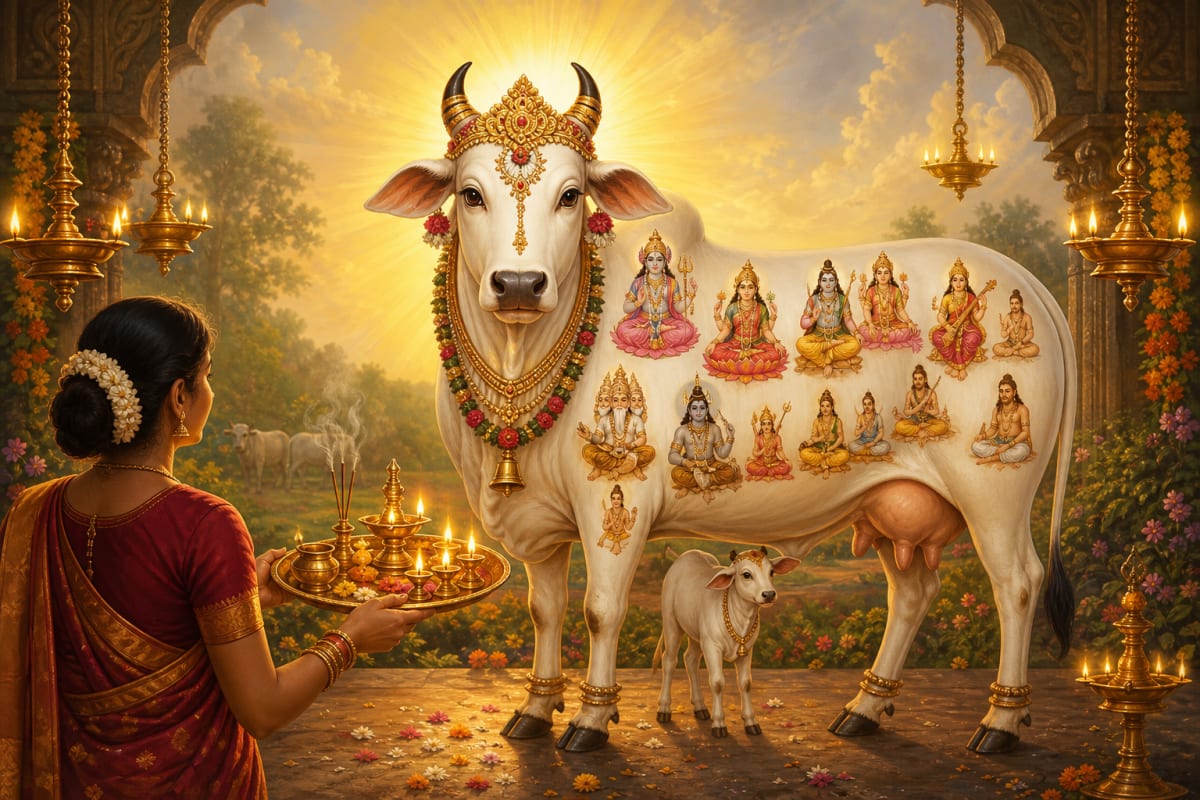
Shri Gau Mata Ji Ki Aarti celebrates the cow as a motherly presence associated with nourishment, affection, and care for all. Understanding its imagery can make the offering a thoughtful expression of gratitude and service. Devotees sing this aarti during daily cow worship and on occasions such as Govatsa Dwadashi and Gopashtami.

Text source: Gita Press, Gorakhpur - Aarti Sanghrah
❁

Shri Gau Mata Ji Ki Aarti

आरती श्री गैया मैया की, आरती हरनी विश्व धैया की। आरती श्री गैया मैया की॥Aarati shri gaiya maiya ki, Aarati harani vishva dhaiya ki. Aarati shri gaiya maiya ki॥

अर्थ-काम सद्धर्म प्रदायिनी, अविचल अमल मुक्ति-पद दायिनी। सुर-मानव सौभाग्य विधायिनी, प्यारी पूज्य नंद छैयाँ की॥ आरती श्री गैया मैया की॥Artha-kama saddharma pradayini, Avichal amal mukti-pad dayini. Sur-manav saubhagya vidhayini, Pyari pujya nanda chhaiyan ki॥ Aarati shri gaiya maiya ki॥

अखिल विश्व प्रतिपालिनी माता, मधुर अमिय दुग्धान्न प्रदाता। रोग-शोक संकट परित्राता, भवसागर हित दृढ़ नैया की॥ आरती श्री गैया मैया की॥Akhil vishva pratipalini mata, Madhur amiya dugdhanna pradata. Rog-shok sankat paritrata, Bhavasagar hit dridh naiya ki॥ Aarati shri gaiya maiya ki॥

आयु, ओज, आरोग्य विकासिनी, दुःख, दैन्य, दारिद्र्य विनाशिनी। सुषमा, सौख्य, समृद्धि प्रकाशिनी, विमल विवेक-बुद्धि दैया की॥ आरती श्री गैया मैया की॥Aayu, oj, aarogya vikasini, Duhkh, dainya, daridrya vinashini. Sushama, saukhya, samriddhi prakashini, Vimal vivek-buddhi daiya ki॥ Aarati shri gaiya maiya ki॥

सेवक हो चाहे दुःखदाई, सम पय-सुधा पियावति माई। शत्रु-मित्र सबको सुखदाई, स्नेह-स्वभाव विश्व जैया की॥ आरती श्री गैया मैया की॥Sevak ho chahe duhkhadai, Sam pay-sudha piyavati mai. Shatru-mitra sabko sukhadai, Sneh-svabhav vishva jaiya ki॥ Aarati shri gaiya maiya ki॥

आरती श्री गैया मैया की, आरती हरनी विश्व धैया की। आरती श्री गैया मैया की॥Aarati shri gaiya maiya ki, Aarati harani vishva dhaiya ki. Aarati shri gaiya maiya ki॥

॥ iti ॥

Text: Gita Press, Gorakhpur - Aarti Sanghrah
Shri Gau Mata Ji Ki Aarti — Meaning

The aarti begins by reverently addressing Gau Mata as a loving mother. It then praises her association with rightful livelihood, worthy desires, and righteous conduct. The reference to pure, steadfast liberation points toward a spiritual life that rises above worldly attachment. Her connection with the good fortune of divine beings and humanity, together with the remembrance of Nanda’s shelter, evokes the pastoral world of Braj and devotion to Krishna. The next passage presents her as a mother who sustains the world. Milk and food are described through nectar-like imagery, expressing gratitude for nourishment. The image of a sturdy boat crossing the ocean of worldly existence conveys a devotee’s trust in spiritual support through life’s difficulties.

The following passage brings together aspirations for vitality, happiness, beauty, and abundance, while also valuing clear discernment. Its appeal for relief from sorrow and hardship expresses the hopeful heart of devotion. Finally, the aarti centres on impartial maternal affection: the caring attendant and the one who causes distress, friend and opponent, all receive the same nourishing care. This closing image invites the devotee to practise compassion, even-mindedness, and selfless service.

The Spiritual Significance of Gau Mata Aarti

In Hindu tradition, reverence for Gau Mata is closely connected with motherhood, nourishment, and compassion toward living beings. Within Krishna devotion, these associations are especially vivid in memories of Braj, its cattle, and Krishna’s pastoral life. Devotees believe that offering this aarti nurtures gratitude and a willingness to serve. Such reverence also has a practical expression: clean drinking water, suitable fodder, a well-kept shelter, and gentle handling. Bringing these everyday responsibilities into worship gives devotion a meaningful place in daily life. When families gather for aarti, it can also be an opportunity to help children understand an animal’s needs and learn considerate behaviour.

When and How to Perform the Aarti

You may offer this aarti after morning or evening worship. Govatsa Dwadashi, known as Vasu Baras in some regions, and Gopashtami are special occasions for it. See the DivyaKaal festival page for this year’s date and muhurat. Place a steady lamp on a clean thali and circle it clockwise before an image or murti of Gau Mata. One customary sequence offers four circles at the feet, two at the navel, one at the face, and seven around the whole form; family and sampradaya practices vary. Ring the bell gently. When worshipping a living cow, seek help from a familiar caretaker, keep the flame well away from the animal, and avoid loud sounds. Let the cow’s comfort and a calm setting guide the offering.

Receiving Aarti, Sharing Prasad, and Offering Service

After the offering, hold your hands safely above the flame to receive its warmth, then bring them toward your forehead. This is the customary way of receiving aarti. Bow respectfully and share the offered prasad with family members or fellow devotees. Place the lamp on a stable, fire-safe surface. At a gaushala, ask the caretaker which food is suitable for the cow and respect its regular feeding routine. Service may also include filling water vessels, helping keep the surroundings clean, or supporting the shelter’s practical needs. In this way, the worship concludes with quiet gratitude and useful care.

Frequently asked questions

When should Gau Mata Aarti be performed?

Gau Mata Aarti may be offered after morning or evening worship. Govatsa Dwadashi and Gopashtami are particularly associated with cow worship. Families engaged in regular cow care often choose a time that suits their routine and local tradition.

Can I perform Gau Mata Aarti before a picture?

Yes, you can offer aarti before a clean picture or murti of Gau Mata at home. Keep the worship area tidy and the lamp steady on its thali. Connecting the offering with compassion and care for living beings is a meaningful practice.

How should the lamp be circled during Gau Mata Aarti?

The lamp is moved clockwise. One common sequence is four circles at the feet, two at the navel, one at the face, and seven around the whole form. Follow your family’s custom, keeping the flame well away when offering aarti near a living cow.

Where can I find the dates of Gopashtami and Govatsa Dwadashi?

See the DivyaKaal festival page for this year’s date and muhurat. Govatsa Dwadashi is known as Vasu Baras in some regions. Customs involving cow worship, affection for the calf, and service at cow shelters vary across regions.

Let reverence for Gau Mata find expression in compassion, cleanliness, and regular care.