☀Divyakaal
Shri Ramchandra Ji Ki Aarti – Aarti Kijai Shri Raghuvar Ji Ki
🪔 Aarti

Shri Ramchandra Ji Ki Aarti – Aarti Kijai Shri Raghuvar Ji Ki

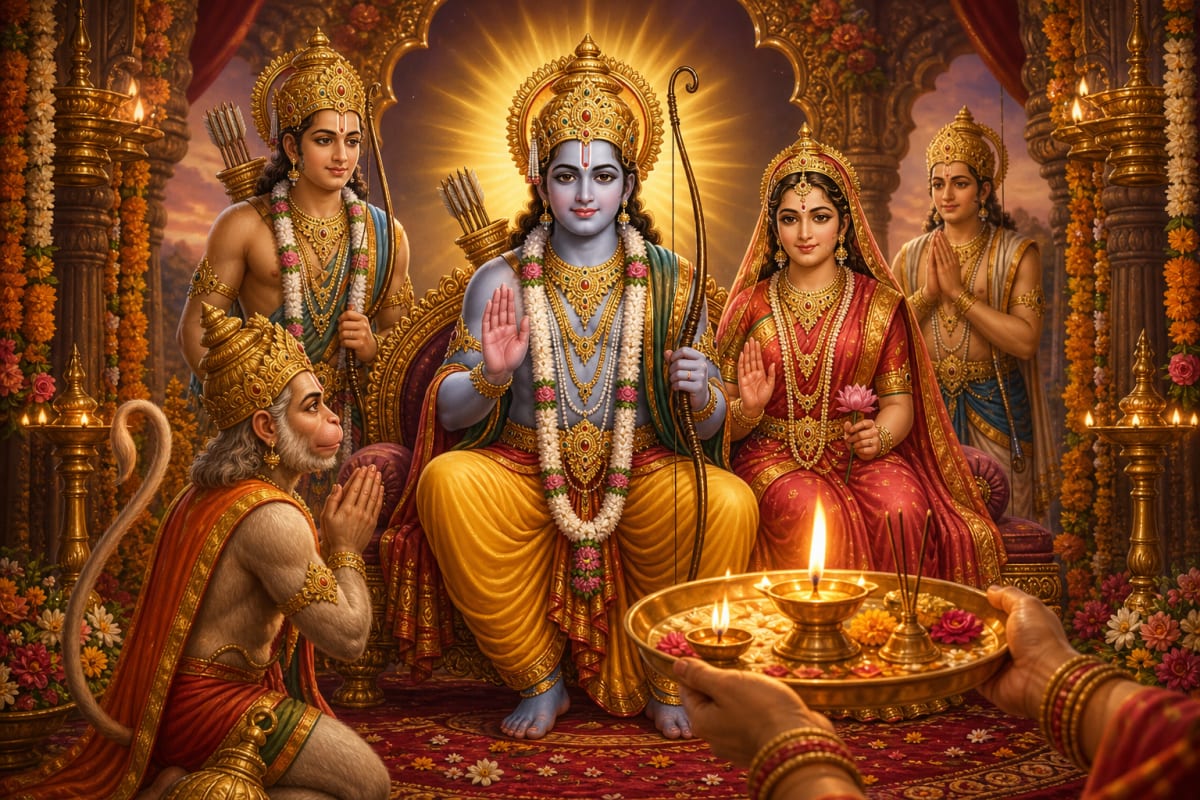
Shri Ramchandra Ji Ki Aarti celebrates Lord Rama as compassionate, devoted to dharma, and affectionate toward his devotees. It honours the son of Dasharatha and Kaushalya as the refuge of all creation. Whether you sing it during daily worship or a Ram Navami celebration, the aarti offers a heartfelt way to express love, gratitude, and surrender.

Text source: लोकप्रचलित श्रीराम आरती
❁

Shri Ramchandra Ji Ki Aarti – Aarti Kijai Shri Raghuvar Ji Ki

आरती कीजै श्री रघुवर जी की, सत चित आनन्द शिव सुन्दर की॥Aarti kijai Shri Raghuvar ji ki, Sat chit anand shiv sundar ki.

दशरथ तनय कौशल्या नन्दन, सुर मुनि रक्षक दैत्य निकन्दन॥ अनुगत भक्त भक्त उर चन्दन, मर्यादा पुरुषोत्तम वर की॥Dasharath tanay Kaushalya nandan, Sur muni rakshak daitya nikandan. Anugat bhakt bhakt ur chandan, Maryada Purushottam var ki.

निर्गुण सगुण अनूप रूप निधि, सकल लोक वन्दित विभिन्न विधि॥ हरण शोक-भय दायक नव निधि, माया रहित दिव्य नर वर की॥Nirgun sagun anup rup nidhi, Sakal lok vandit vibhinn vidhi. Haran shok-bhay dayak nav nidhi, Maya rahit divya nar var ki.

जानकी पति सुर अधिपति जगपति, अखिल लोक पालक त्रिलोक गति॥ विश्व वन्द्य अवन्ह अमित गति, एक मात्र गति सचराचर की॥Janaki pati sur adhipati jagpati, Akhil lok palak trilok gati. Vishva vandya avanh amit gati, Ek matra gati sacharachar ki.

शरणागत वत्सल व्रतधारी, भक्त कल्प तरुवर असुरारी॥ नाम लेत जग पावनकारी, वानर सखा दीन दुख हर की॥Sharanagat vatsal vratdhari, Bhakt kalp taruvar asurari. Nam let jag pavankari, Vanar sakha din dukh har ki.

॥ iti ॥

Text: लोकप्रचलित श्रीराम आरती
Shri Ramchandra Ji Ki Aarti – Aarti Kijai Shri Raghuvar Ji Ki — Meaning

The aarti opens by honouring Rama, the finest of the Raghu lineage, as truth, consciousness, bliss, auspiciousness, and beauty. It then remembers him as Dasharatha’s son and Kaushalya’s joy. He protects celestial beings and sages, overcomes evil, and brings a cooling comfort to devotees’ hearts, like sandalwood. The title Maryada Purushottama presents him as the supreme example of righteous conduct. Next, the aarti embraces both his formless nature and his manifest form. All realms worship him; devotees look to him as the remover of sorrow and fear and the source of abundance.

The following part honours Rama as Janaki’s husband, sovereign of the universe, and sustainer of the three worlds. His glory is boundless, and all moving and unmoving creation finds refuge in him. The closing passage celebrates his tenderness toward those who seek shelter and his steadfast commitment to his vows. To devotees, he is generous like a wish-fulfilling tree. His name evokes purification, while his friendship with the vanaras and compassion for the distressed reveal an intimate, approachable Lord.

When to Sing Shri Rama Aarti

Sing this aarti at the conclusion of morning or evening worship. It is also sung on Ram Navami, Vijayadashami, and after Sundarkand or Ramayana recitations. Offer it with love, gratitude, and devotion to Shri Rama.

A Simple Aarti Method

Clean the worship space and remember Shri Sita-Rama, Lakshmana, and Hanuman. Offer sandalwood paste, flowers, and naivedya according to your means. Light a ghee lamp on a stable aarti plate. Facing the sacred image, sing the aarti and move the lamp slowly clockwise as seen by you. A bell may be rung gently. Keep your attention on the Lord, hold the plate steadily, and keep the flame clear of clothing and decorations.

The Spirit of the Offering

The lamp expresses love, gratitude, and surrender. Remember Rama's truthfulness, compassion, righteous conduct, and faithfulness to duty, and pray to embody these qualities. His care for those who seek refuge and his friendship with the vanaras reveal his loving and approachable presence.

After the Aarti

Receive the warmth of the lamp with your palms at a safe distance and bring them to your forehead. Bow to the Lord and share the offered prasad with those present. Conclude with the joyful invocation, Siyavar Ramchandra ki jai! Place the lamp on a secure surface and attend to it while it remains alight.

Frequently asked questions

Who is praised in Shri Ramchandra Ji Ki Aarti?

The aarti praises Lord Rama as Raghuvar, the son of Dasharatha, the joy of Kaushalya, Janaki’s husband, and Maryada Purushottama. It celebrates his compassion, righteous conduct, and loving care for those who turn to him.

Why is Lord Rama called Raghuvar?

Raghuvar means the finest of the Raghu lineage. Rama is traditionally understood to belong to the royal line of King Raghu. The name honours both that heritage and the exemplary character that devotees cherish in him.

Can I sing Shri Ramchandra Ji Ki Aarti every day?

Yes, you can include this aarti in daily worship. Choose a convenient morning or evening time and sing with a calm, attentive mind. You may place it at the conclusion of worship, following your household’s customary practice.

When should Rama aarti be performed on Ram Navami and Dussehra?

On these festivals, aarti is generally offered at the conclusion of Rama worship. The order of celebrations varies between temples and family traditions. See the DivyaKaal festival page for this year’s date and muhurat.

Remember Rama’s compassion, and let his example of righteous conduct guide your day.