☀Divyakaal
Om Jai Shiv Omkara – Shri Shiv Ji Ki Aarti
🪔 Aarti

Om Jai Shiv Omkara — Shri Shiv Ji Ki Aarti with Meaning

Om Jai Shiv Omkara is a beloved aarti to Lord Shiva that honours Brahma, Vishnu and Sadashiva as expressions of one supreme reality. Often sung at the close of Shiva worship, it invites a spirit of devotion and attentive reflection. Explore its imagery through a simple explanation, Roman transliteration and guidance on the traditional offering of the aarti lamp.

Text source: परंपरागत शिव आरती — आरती संग्रह: श्री शिवजी आरती
❁

Om Jai Shiv Omkara – Shri Shiv Ji Ki Aarti

ॐ जय शिव ओंकारा, स्वामी जय शिव ओंकारा। ब्रह्मा, विष्णु, सदाशिव, अर्द्धांगी धारा॥ ॐ जय शिव ओंकारा॥Om jai Shiv Omkara, Swami jai Shiv Omkara. Brahma, Vishnu, Sadashiv, Ardhangi dhara. Om jai Shiv Omkara.

एकानन चतुरानन पञ्चानन राजे। हंसासन गरूड़ासन वृषवाहन साजे॥ ॐ जय शिव ओंकारा॥Ekanan chaturanan panchanan raje. Hansasana Garudasana vrishavahana saje. Om jai Shiv Omkara.

दो भुज चार चतुर्भुज दसभुज अति सोहे। त्रिगुण रूप निरखते त्रिभुवन जन मोहे॥ ॐ जय शिव ओंकारा॥Do bhuj char chaturbhuj dasbhuj ati sohe. Trigun roop nirakhate tribhuvan jan mohe. Om jai Shiv Omkara.

अक्षमाला वनमाला मुण्डमाला धारी। त्रिपुरारी कंसारी कर माला धारी॥ ॐ जय शिव ओंकारा॥Akshamala vanamala mundamala dhari. Tripurari Kansari kar mala dhari. Om jai Shiv Omkara.

श्वेताम्बर पीताम्बर बाघम्बर अंगे। सनकादिक गरुणादिक भूतादिक संगे॥ ॐ जय शिव ओंकारा॥Shwetambar pitambar baghambar ange. Sanakadik garunadik bhutadik sange. Om jai Shiv Omkara.

कर के मध्य कमण्डलु चक्र त्रिशूलधारी। सुखकारी दुखहारी जगपालन कारी॥ ॐ जय शिव ओंकारा॥Kar ke madhya kamandalu chakra trishuldhari. Sukhkari dukhahari jagpalan kari. Om jai Shiv Omkara.

ब्रह्मा विष्णु सदाशिव जानत अविवेका। प्रणवाक्षर मध्ये ये तीनों एका॥ ॐ जय शिव ओंकारा॥Brahma Vishnu Sadashiv janat aviveka. Pranavakshar madhye ye tinon eka. Om jai Shiv Omkara.

लक्ष्मी व सावित्री पार्वती संगा। पार्वती अर्द्धांगी, शिवलहरी गंगा॥ ॐ जय शिव ओंकारा॥Lakshmi va Savitri Parvati sanga. Parvati ardhangi, Shivlahari Ganga. Om jai Shiv Omkara.

पर्वत सोहैं पार्वती, शंकर कैलासा। भांग धतूर का भोजन, भस्मी में वासा॥ ॐ जय शिव ओंकारा॥Parvat sohain Parvati, Shankar Kailasa. Bhang dhatur ka bhojan, bhasmi mein vasa. Om jai Shiv Omkara.

जटा में गंगा बहत है, गल मुण्डन माला। शेष नाग लिपटावत, ओढ़त मृगछाला॥ ॐ जय शिव ओंकारा॥Jata mein Ganga bahat hai, gal mundan mala. Shesh nag lipatavat, odhat mrigchhala. Om jai Shiv Omkara.

काशी में विराजे विश्वनाथ, नन्दी ब्रह्मचारी। नित उठ दर्शन पावत, महिमा अति भारी॥ ॐ जय शिव ओंकारा॥Kashi mein viraje Vishwanath, Nandi brahmachari. Nit uth darshan pavat, mahima ati bhari. Om jai Shiv Omkara.

त्रिगुणस्वामी जी की आरती जो कोइ नर गावे। कहत शिवानन्द स्वामी, मनवान्छित फल पावे॥ ॐ जय शिव ओंकारा॥Trigunswami ji ki aarti jo koi nar gave. Kahat Shivanand Swami, manvanchhit phal pave. Om jai Shiv Omkara.

॥ iti ॥

Text: परंपरागत शिव आरती — आरती संग्रह: श्री शिवजी आरती
Om Jai Shiv Omkara – Shri Shiv Ji Ki Aarti — Meaning

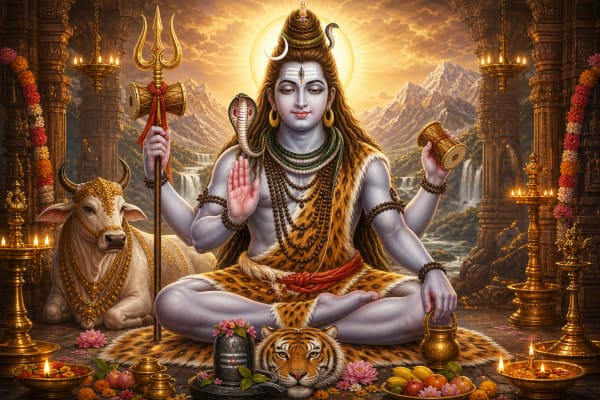
The aarti opens by praising Shiva as Omkara and presents Brahma, Vishnu and Sadashiva as expressions of one supreme reality. Their one, four and five faces, and the swan, Garuda and bull, identify their distinct forms. Different numbers of arms and the three qualities of nature suggest the breadth of divine manifestation. Prayer beads, a forest garland and a skull garland distinguish these forms further. Tripurari names Shiva as the destroyer of Tripura, while Kansari refers to Shri Krishna, the incarnation of Vishnu who defeated Kansa. White and yellow garments, tiger skin, accompanying sages and attendants, and the water pot, discus and trident evoke creation, preservation and transformation.

The hymn then draws these forms together within pranava, the sacred sound Om. Lakshmi, Savitri and Parvati bring the divine feminine into view, with Parvati as Shiva’s other half and Ganga adorning him. Kailasa, ash, bhang and datura evoke his unadorned, renunciant presence. Ganga flowing through his matted hair, the garland around his neck, the serpent and deerskin extend this ascetic imagery. The focus then turns to Vishwanath of Kashi and Nandi, celebrating the devotion associated with his darshan. In its closing lines, Shivanand Swami expresses the traditional belief that singing this aarti with devotion brings the fulfilment of heartfelt wishes.

When and How to Offer Shiva Aarti

Offer Shiva aarti at the conclusion of daily worship, in the morning or evening. Mondays, Pradosh Vrat, Masik Shivratri, and Mahashivratri are special occasions for his worship. Prepare a clean worship space and offer water, bilva leaves, flowers, and naivedya according to your means. Light a ghee lamp on a stable aarti plate. Before the Shiva linga or sacred image, sing the aarti while moving the lamp slowly clockwise as seen by you. Ring the bell gently, keep the plate steady, and keep the flame clear of clothing and decorations.

Shiva and the Unity of the Three Divine Forms

The aarti honours Brahma, Vishnu, and Sadashiva within one prayer. Their different faces, vehicles, garments, and sacred attributes express creation, preservation, and dissolution. The verse on pranava draws these forms together within the sacred sound Om. Contemplate this underlying unity and offer the lamp with devotion and surrender.

Receiving Aarti and Sharing Prasad

After the offering, receive the warmth of the lamp with your palms at a safe distance and bring them to your forehead. Bow to Lord Shiva and share the offered prasad with those present. Spend a few moments in remembrance and conclude with Har Har Mahadev! Keep the lamp on a stable surface and attend to it while it remains alight.

Frequently asked questions

When should Om Jai Shiv Omkara Aarti be sung?

It is commonly sung at the conclusion of Shiva worship. Daily evening puja, Mondays, Pradosh Vrat, Masik Shivratri and Mahashivratri are familiar occasions. You can follow the regular worship routine observed in your household or temple.

Why does Shiva Aarti mention Brahma and Vishnu?

The aarti presents Brahma, Vishnu and Sadashiva as distinct expressions of one supreme reality. Their vehicles, clothing and sacred attributes differ, but the hymn brings them together within pranava, the sacred sound Om. This unity is central to its meaning.

Which direction should the aarti lamp move?

Move the lamp clockwise before the deity. A familiar sequence honours the feet, navel, face and then the entire form. The number of circles and details of presentation vary according to household and temple traditions.

Who composed Om Jai Shiv Omkara Aarti?

The closing stanza names Shivanand Swami, and the aarti is commonly associated with him. Its wording can differ somewhat between devotional collections and regional singing traditions, reflecting the ways it has been preserved and sung.

What should I do after Shiva Aarti?

Reverently receive the warmth of the lamp with your palms and bring your hands towards your forehead or eyes. Then bow and receive prasad. Keep a safe distance from the flame and follow the arrangements when worshipping in a temple.

Offer Shiva aarti with devotion, and carry its spirit of surrender into daily life.