Karwa Chauth 2026
Karwa Chauth falls on 29-10-2026 in New Delhi. See the verified festival tithi, special puja muhurta, puja method and fasting rules below.
Introduction
Karwa Chauth is a vrat observed with prayers for marital well-being, the welfare of one's spouse and the family's happiness. Traditionally, married women fast on this day, listen to the Karwa Chauth katha and break their fast after offering arghya to the Moon. According to the supplied panchang, Karwa Chauth in New Delhi falls on Thursday, 29 October 2026. Its panchang basis is Kartik Krishna Chaturthi.
Festival-specific puja and katha muhurta
Clear festival tithi details
For New Delhi, all times use Asia/Kolkata. The applicable festival tithi on 29-10-2026 is Chaturthi, from 29-10-2026 · 01:07 until 29-10-2026 · 22:10. Moonrise is 20:13, sunrise 06:31 and sunset 17:37.
Vrat rules
According to the customary practice of Karwa Chauth, fasting is observed from sunrise until sighting the Moon. Many families observe a nirjala vrat, a fast without water, but it should not be considered mandatory for everyone. Where the tradition of sargi is followed, it is consumed before sunrise; sunrise in New Delhi on this day is at 06:31. During the vrat, maintain self-restraint, behave calmly and focus on puja and katha. After sighting the Moon and offering arghya, break the fast according to your family's customs. In cases of pregnancy, diabetes, illness or regular medication use, decide whether to observe a nirjala fast with medical advice, and do not withhold necessary water, food or medicine.
Puja vidhi
- 1
Bathe, wear clean clothes and take the sankalp for the vrat according to your tradition.
- 2
Clean the puja space and arrange the karwa, water vessel, lamp and puja plate.
- 3
According to your family's customs, worship Shiva-Parvati, Ganesha and the revered form associated with Karwa Chauth.
- 4
Offer flowers, roli, akshat and naivedya during the puja-katha muhurta from 17:37 to 18:49.
- 5
Listen to or read the Karwa Chauth katha and pray for marital well-being.
- 6
After moonrise at 20:13, offer water as arghya to the Moon once you have sighted it.
- 7
Break the fast by consuming water and food according to your family's tradition.
Puja samagri
A karwa or clean water vessel, a lota for arghya, a puja plate, a lamp, ghee or oil, a cotton wick, roli or kumkum, akshat, flowers, incense, fruit, sweets or other naivedya, and the Karwa Chauth katha. According to family tradition, an image or idol of Shiva-Parvati and Ganesha, shringar items, bayana and a sieve may also be kept; their use is not the same in every family.
Katha and significance
Among the popular folk narratives of Karwa Chauth, the story of Veeravati is well known. One version includes an episode in which her brothers arrange an artificial sighting of the Moon, she breaks her fast prematurely and later observes the vrat with devotion. Versions of the story vary by family and region. In traditional belief, this vrat is associated with prayers for marital good fortune and the spouse's long life. Puja, katha and arghya to the Moon express devotion, patience and mutual affection within marriage; they should not be understood as a guarantee of any particular worldly outcome.
Frequently asked questions
When is Karwa Chauth 2026 in New Delhi?
According to the supplied panchang, it is on Thursday, 29 October 2026.
When will the Chaturthi tithi for Karwa Chauth begin and end?
Chaturthi will begin at 01:07 on 29 October and end at 22:10 on the same day.
What is the special muhurta for puja and katha?
It is from 17:37 to 18:49 on 29 October. Its basis is the sandhya-pradosh period of three ghati from sunset, limited by moonrise and the applicable Chaturthi tithi.
When will the Moon rise in New Delhi, and when should the fast be broken?
Moonrise is at 20:13. Break the fast according to family customs after sighting the Moon and offering arghya; the time when the Moon becomes visible may depend on the weather and conditions at the horizon.
Why does the panchang contain both the names Ashwin and Kartik?
The month's name is Ashwin in the Amanta month system and Kartik in the Purnimanta system. The supplied Karwa Chauth festival designation uses Kartik Krishna Chaturthi.


Aarti, katha and puja vidhi for this festival
Text, meaning and samagri checklist — one click away
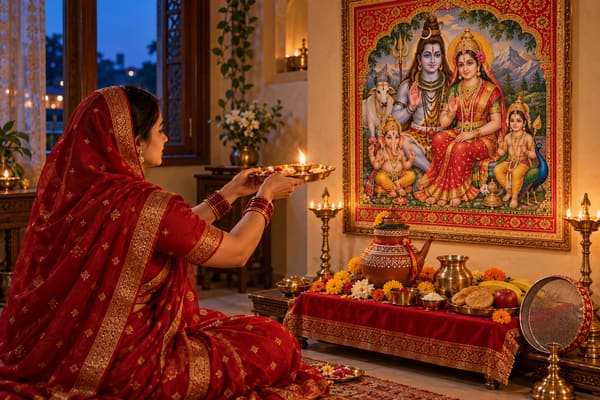 🪔 AartiOm Jai Karwa Maiya — Karwa Chauth AartiRead Om Jai Karwa Maiya aarti in Hindi with Roman transliteration, a simple meaning and the aarti sequence for Karwa Chauth worship.Read →
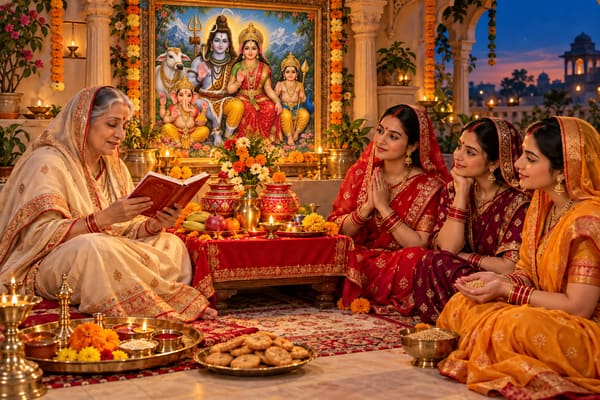 📖 Vrat KathaKarwa Chauth Vrat Katha and Vinayak Ji KathaRead the complete Karwa Chauth story of the merchant’s daughter and the story of Vinayak Ganesha, translated in full from the supplied Hindi text.Read →
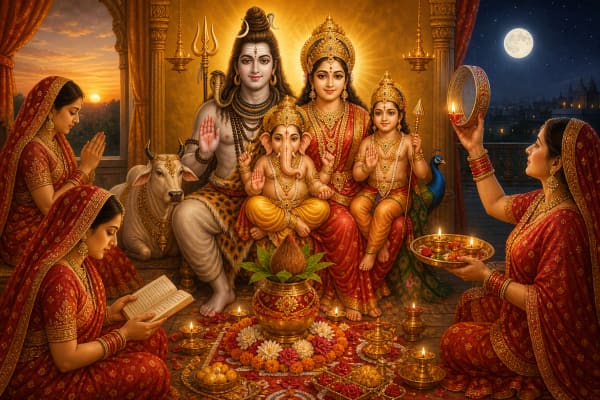 🌺 Puja VidhiKarwa Chauth Vrat Puja VidhiFollow the Karwa Chauth worship sequence: sankalp, Gauri and Shiva family puja, katha, aarti, moon sighting, arghya and completion of the fast.Read →
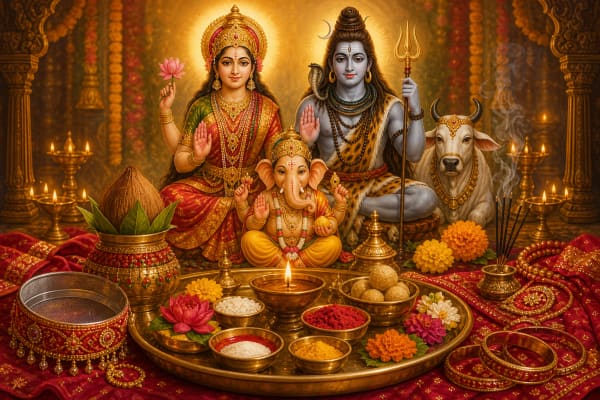 🧺 Puja Samagri ChecklistKarwa Chauth Vrat Puja SamagriKarwa Chauth puja checklist: karwa, Gauri-Ganesha image, lamp, offerings, moon arghya, adornments and customary sargi and bayana preparations.Read →